
IQ Air Conditioners | on cue for you

R32 INVERTER CASSETTE UNIT

R32 INVERTTER CASSETTE UNIT  

wifi     inverter

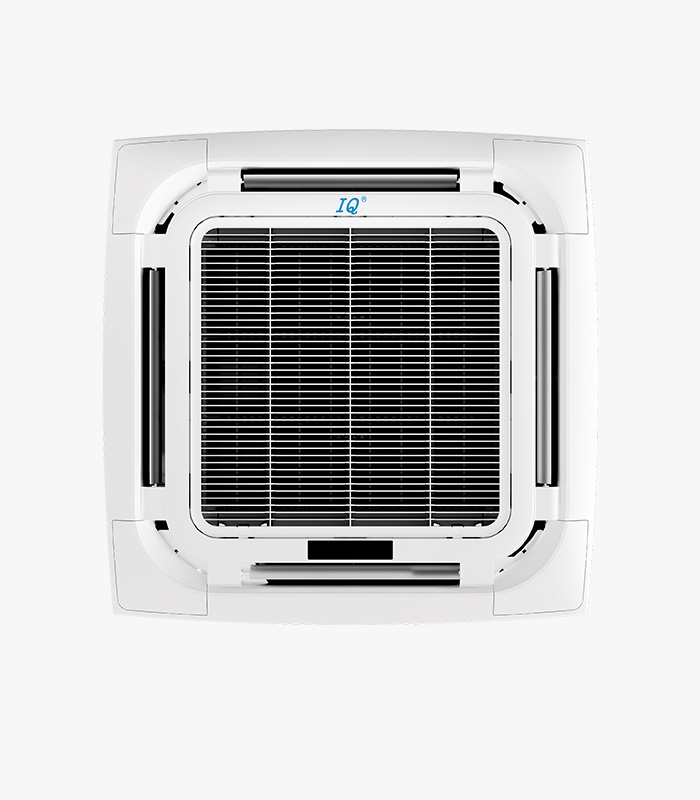
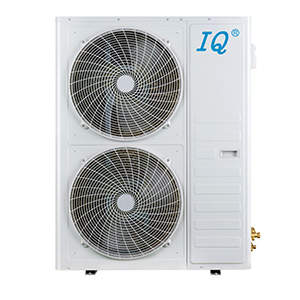
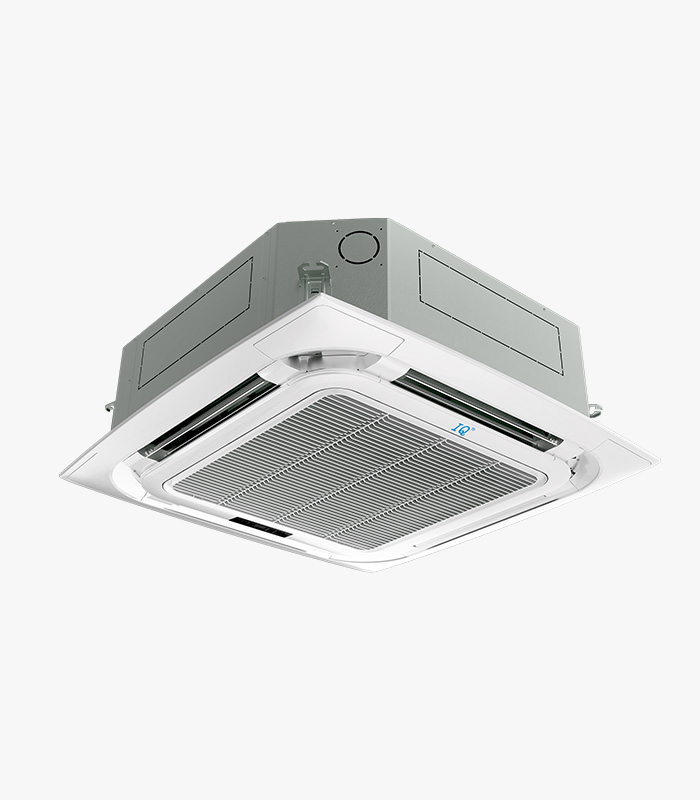
IQ DC Inverter Cassette Series delivers high-performance, eco-friendly climate control designed seamlessly for modern spaces. Engineered for efficiency and uniform comfort, it is the perfect solution for demanding residential and commercial layouts.

MODEL: 
SIZES FROM: 12K Btu - 24K BTU

  • Description
  • Error Codes

R32 Inverter Cassette

360° Uniform Comfort:
Features a round-flow panel that distributes air in every direction for balanced room temperatures.

Eco-Friendly Efficiency:
Powered by green R32 refrigerant, reducing global warming potential and requiring less charging volume than traditional units.

High Volume, Low Noise:
Utilizes a large-diameter spiral wind wheel to deliver powerful, long-distance airflow while maintaining whisper-quiet operation.

Ultra-Compact Profile:
At just 246mm thick, its slim body design minimizes required ceiling space for an easier, cleaner installation.

Built for Reliability:
Equipped with an anti-leakage plastic drain pan, a fireproof metal electrical control box, and an adhesive-potted stable control board.

R32 Inverter Troubleshooting Codes

Download Troubleshooting PDF

After indoor and outdoor units shut down due to failure, failure code will display on wired controller or remote receiving board[cite: 3]. In case of normal protection, no failure code will display on wired controller or remote receiving board of indoor unit[cite: 3]. Wired controller doesn't automatically send warning, which requires pressing CHECK button to display corresponding failure codes[cite: 3]. Remote receiving board directly displays failure codes[cite: 3]. After failures are removed, display will automatically disappear[cite: 3].

Fault Code Fault Description Causes of Possible Failure
A1 Fault with the room temperature sensor on the indoor unit[cite: 3] Damage of the room temperature sensor on the indoor unit
Poor contact of the room temperature sensor on the indoor unit
Damage of wiring of the room temperature sensor on the indoor unit
Damage of the main PCB on the indoor unit[cite: 3]
A2 Fault with the temperature sensor in the middle of indoor evaporator[cite: 3] Damage of the temperature sensor on the indoor unit
Poor contact of the temperature sensor on the indoor unit
Damage of wiring of the temperature sensor on the indoor unit
Damage of the main PCB on the indoor unit[cite: 3]
A3 Fault with the liquid pipe temperature sensor on the indoor unit[cite: 3] Damage of the liquid pipe temperature sensor on the indoor unit
Poor contact of the liquid pipe temperature sensor on the indoor unit
Damage of wiring of the liquid pipe temperature sensor on the indoor unit
Damage of the main PCB on the indoor unit[cite: 3]
A4 Fault with the gas-pipe temperature sensor on the indoor unit[cite: 3] Damage of the gas pipe temperature sensor on the indoor unit
Poor contact of the gas-pipe temperature sensor on the indoor unit
Damage of wiring of the gas pipe temperature sensor on the indoor unit
Damage of the main PCB on the indoor unit[cite: 3]
A5 Fault with the drainage[cite: 3] Float switch disconnected or poor wiring
Error setting of model parameters
Drain plug
Damage of the pump[cite: 3]
A6 Fault with the Fan motor of indoor unit[cite: 3] Low voltage
Poor wiring
Damage of the main PCB on the indoor unit
Damage of the motor[cite: 3]
A7 Indoor unit EEPROM module failure[cite: 3] Indoor unit PCB is broken
EEPROM module is broken[cite: 3]
A9 Communication error between the outdoor unit and the indoor unit[cite: 3] Damage of the main PCB on the indoor unit
Damage of the main PCB on the outdoor unit
Poor wiring[cite: 3]
AA Communication error between the wired controller and main PCB of the indoor unit[cite: 3] Poor wiring
Damage of the wired controller
Damage of the main PCB on the indoor unit[cite: 3]
H1 Fault with the High pressure switch[cite: 3] System pipeline blockage
Damage of the pressure switch[cite: 3]
H4 Fault with the low pressure switch[cite: 3] Lack of the refrigerant
Stop valve unopened
Damage of the pressure switch[cite: 3]
C1 Fault with the Environmental temperature sensor on the outdoor unit[cite: 3] Damage of the Environmental temperature sensor on the outdoor unit
Poor contact of the Environmental temperature sensor on the outdoor unit
Damage of wiring of the Environmental temperature sensor on the outdoor unit
Damage of the main PCB on the outdoor unit[cite: 3]
C2 Fault with the defrosting temperature sensor on the outdoor unit[cite: 3] Damage of the defrosting temperature sensor on the outdoor unit
Poor contact of the defrosting temperature sensor on the outdoor unit
Damage of wiring of the defrosting temperature sensor on the outdoor unit
Damage of the main PCB on the outdoor unit[cite: 3]
C3 Fault with the discharge temperature sensor[cite: 3] Damage of the discharge temperature sensor on the outdoor unit
Poor contact of the discharge temperature sensor on the outdoor unit
Damage of wiring of the discharge temperature sensor on the outdoor unit
Damage of the main PCB on the outdoor unit[cite: 3]
C6 Fault with the suction temperature sensor[cite: 3] Damage of the suction temperature sensor on the outdoor unit
Poor contact of the suction temperature sensor on the outdoor unit
Damage of wiring of the suction temperature sensor on the outdoor unit
Damage of the main PCB on the outdoor unit[cite: 3]
C8 Fault with the temperature sensor in the middle of outdoor condenser[cite: 3] Damage of the temperature sensor on the outdoor unit
Poor contact of the temperature sensor on the outdoor unit
Damage of wiring of the temperature sensor on the outdoor unit
Damage of the main PCB on the outdoor unit[cite: 3]
J2 Communication error between the outdoor unit and the indoor unit[cite: 3] Damage of the main PCB on the indoor unit
Damage of the main PCB on the outdoor unit
Poor wiring[cite: 3]
J3 Communication error between the driver PCB and main PCB of the outdoor unit[cite: 3] Damage of the driver PCB on the outdoor unit
Damage of the main PCB on the outdoor unit
Poor wiring[cite: 3]
J7 Fault with the outdoor unit EEPROM[cite: 3] Chip damage[cite: 3]
E1 Fault of four way valve[cite: 3] Damage of four-way valve
Damage to coil of four-way valve[cite: 3]
E3 Protection high-temperature discharge[cite: 3] Lack of the refrigerant
Stop valve unopened
Damage of the main PCB on the outdoor unit[cite: 3]
E8 Fault with anti-high temperature protection of indoor unit in heating mode[cite: 3] Outdoor condenser viscous
Indoor evaporator viscous[cite: 3]
FH Protection lower temperature discharge[cite: 3] Temperature sensor shedding
Damage of the main PCB on the outdoor unit[cite: 3]
31 Fault with the inverter module protection[cite: 3] Fault with the inverter module protection[cite: 3]
32 Compressor drive hardware protection[cite: 3] Damage of the EE chip of driver board[cite: 3]
33 Module software protection[cite: 3] Supply voltage below limit/exceed limit
Supply voltage exceed limit
Outdoor fan stop or low speed[cite: 3]
34 Compressor start failure[cite: 3] Compressor power line not connected[cite: 3]
35 Fault with the over-electric current protection[cite: 3] Excessive running current of the unit
Voltage drops abruptly in operation[cite: 3]
36 Fault with the over-voltage or low voltage protection[cite: 3] Excessive in-put voltage
Lower input voltage[cite: 3]
37 Fault with the modular temperature sensor on the outdoor unit[cite: 3] Sensor damage of compressor IPM module[cite: 3]
38 Fault with the Compressor Power supply Phase-deficiency protection[cite: 3] Compressor power line not connected[cite: 3]
39 Protection of compressor driving module for excessive temperature[cite: 3] Poor contact between compressor IPM module and radiator[cite: 3]
3H Fault with the Fan motor 1 of outdoor unit[cite: 3] Damage of motor[cite: 3]
3h Fault with the Fan motor 2 of outdoor unit[cite: 3] Damage of motor[cite: 3]
3C Overcurrent protection of outdoor DC motor[cite: 3] High speed of DC motor[cite: 3]
3U Overvoltage protection of outdoor DC motor[cite: 3] Low voltage output[cite: 3]
3B Compressor drive PFC software protection[cite: 3] Excessive running current of the unit
Voltage drops abruptly in operation[cite: 3]
3F Compressor drive PFC hardware protection[cite: 3] Damage of the PFC circuit components
Reactor damage[cite: 3]
41 IPM protection for driving board of outdoor DC fan[cite: 3] Damage of IPM components of DC fan[cite: 3]
99 Communication error between the driver PCB and main PCB of the indoor unit[cite: 3] Abnormal power supply of fan driving board
Poor contact of the communication line of fan drive board
Damage of fan driving board[cite: 3]
9A Temperature protection of indoor DC fan module[cite: 3] Damage of fan driving board[cite: 3]
9H Failure of indoor DC fan start-up[cite: 3] Damage of fan motor
High speed of DC motor[cite: 3]
9C Overcurrent protection of indoor DC motor[cite: 3] Excessive running current of fan motor[cite: 3]
9U Overvoltage and undervoltage protection of indoor DC motor[cite: 3] Excessive in-put voltage
Lower input voltage[cite: 3]
9E IPM protection for driving board of indoor DC fan[cite: 3] Sensor damage of DC motor IPM module[cite: 3]
9F EE protection for driving board of indoor DC fan[cite: 3] Damage of EE chip of Driver board[cite: 3]